
The cultural heritage of northern Mallorca spans everything from Roman ruins to medieval and defensive architecture. They are a visual record of Balearic identity and history, brought to life through historic routes, churches, towers and museums located across the towns of Pollença and Alcudia, which offer visitors an enriching and educational experience. Staying in one of the properties managed by Pollentia Rentals gives you the perfect base from which to explore these routes in complete comfort.
Routes through history in the north of Mallorca
The bay that connects Pollença and Alcudia has been one of the Mediterranean’s most strategically important spots for thousands of years. That rich history means that those staying in Alcudia can trace the footsteps of several different civilisations, all within just a few kilometres:
- The Roman legacy: The ancient Roman city of Pollentia, founded in 123 BC, is the most significant archaeological site on the island, home to many spectacular ruins, including the forum and a theatre carved directly into the rock.
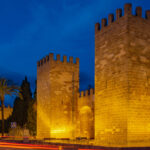
- The walled medieval town: The historic old town of Alcudia still has its medieval walls intact, built by King Jaume II in the 14th century to defend the townspeople from siege.
- Religious devotion in the 18th century: The Calvary of Pollença, with its 365 steps lined by ancient cypress trees, leads up to a small baroque chapel and remains one of the most iconic pilgrimage routes in the Balearic Islands.
A guide to the monuments for your itinerary
To plan a cultural route from Pollença, it helps to group the sites by their historical period and purpose:
- Roman era (archaeological sites): The ruins of the city of Pollentia take you back to the very origins of urban civilisation on the island.
- Middle Ages (military architecture): The imposing walls and the Porta del Moll, a magnificent gateway, in Alcudia are the finest surviving examples of Gothic fortification in the area.
- 16th and 17th centuries (defensive towers): Monuments such as the Talaia d’Albercutx (Albercutx Watchtower) in Formentor demonstrate the sophisticated coastal lookout system built to guard against piracy.
- Baroque (churches and convents): The Església de Nostra Senyora dels Àngels (Church of Our Lady of the Angels) presides over Pollença’s main square, with its striking rose window and richly decorated interior.
- Contemporary era (museums): ThePollença Museum, housed in the former Convent of Santo Domingo, holds collections of Gothic art and local contemporary painting.
The value of architectural conservation
Throughout the 16th and 17th centuries, the north of Mallorca was a frequent target for Ottoman corsairs, which explains the defensive architecture which is found across the region. The watchtowers formed a visual communication network, using smoke signals to warn inland communities of approaching danger.
Today, these fortifications are protected as Assets of Cultural Interest. This commitment to preservation has turned the north of the island into a remarkable open-air museum, just waiting to be explored on foot or by bike.
Today, these fortifications are protected as Assets of Cultural Interest. This steadfast commitment to preservation has turned the north of the island into a remarkable open-air museum, just waiting to be explored on foot or by bike.
The journey through time continues the moment you step through the door of your accommodation. At Pollentia Rentals, we’ll help you find the perfect property for your cultural adventure. Get in touch via our website, give us a ring on +34 971 532 878, or visit us at our office in Pollença. We’re here to make sure your time in northern Mallorca is simply wonderful.